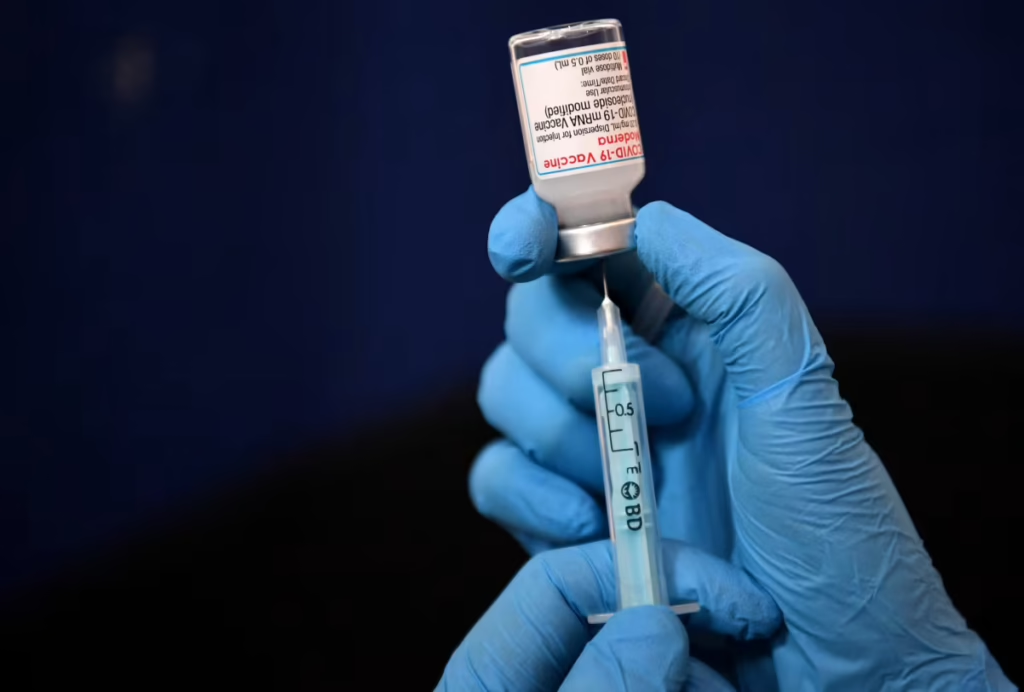
Every August 11, Annual Medical Checkup Day reminds us to do something simple and easy to put off: schedule the yearly visit with our doctor. It is a good reminder. Routine checkups catch high blood pressure, flag early signs of diabetes, and keep vaccinations current. But for pancreatic cancer, that same ordinary appointment can be something more. It can be the moment a life is saved.
At PRECEDE, we believe the checkup is where the fight against pancreatic cancer begins.
Why early detection matters more here than almost anywhere
Pancreatic cancer remains one of the deadliest diseases in medicine. As of 2026, the five-year survival rate sits at just 13%, and it has not meaningfully improved in three years. Pancreatic cancer is now the third leading cause of cancer-related death in the United States, and researchers expect it to become the second within the decade.
Here is the number that should change the conversation. When pancreatic cancer is caught at its earliest stage, before it has spread, the five-year survival rate climbs to 81%. That is more than six times higher than the overall rate.
The tragedy is that only a small fraction of cases are found this early. Pancreatic cancer is often silent in its earliest and most treatable stages, and its symptoms, when they do appear, are easy to mistake for something ordinary. By the time many people are diagnosed, the window for the most effective treatment has already closed.
PRECEDE exists to change that math. Our mission is to raise the pancreatic cancer five-year survival rate from 13% to 50%, and early detection is how we get there.
Prevention starts with knowing your risk
Not every case of pancreatic cancer can be prevented, but understanding your personal risk is one of the most powerful steps you can take. Some risk factors are within your control, and a checkup is the right place to talk about them:
- Smoking, which is one of the most significant modifiable risk factors
- Obesity and a diet high in processed foods
- Heavy alcohol use, which can lead to chronic pancreatitis
- Long-standing type 2 diabetes
There is one signal that deserves special attention. New-onset diabetes after age 50, especially when it comes with unexplained weight loss and no typical risk factors, can in some cases be an early warning sign of pancreatic cancer rather than a cause of it. If this describes you or someone you love, it is worth raising directly with your doctor.
The role of genetic screening
For a meaningful share of patients, pancreatic cancer risk is written into their family history. Up to 10% of pancreatic cancers are linked to an inherited genetic cause, and knowing whether you carry that risk can open the door to earlier, more vigilant care.
Several inherited gene mutations are associated with a higher risk of pancreatic cancer, including BRCA1, BRCA2, PALB2, ATM, and CDKN2A, along with hereditary conditions such as Lynch syndrome and Peutz-Jeghers syndrome. But genetics tell only part of the story. A family history of pancreatic cancer can be just as important as a known mutation. If a parent, sibling, or child has been diagnosed, your own risk rises, even when no specific gene has been identified. Family history is one of the clearest signals we have, and it deserves the same attention as a genetic test result.
This is where genetic screening becomes so valuable. Genetic counseling and testing can help identify people who are at high risk long before any symptoms appear. And for those who are identified as high risk, ongoing surveillance through specialized imaging can catch changes early, when treatment works best.
This is the very heart of PRECEDE’s work. Through the PRECEDE Consortium, an international network of academic medical centers across a dozen countries, we enroll high-risk individuals into structured surveillance and research programs. Every person who joins helps build the shared knowledge that will make early detection possible for the next generation of families.
What to do on your checkup this August 11
You do not need to be a scientist to take the first step. When you sit down with your doctor, consider doing three things:
- Share your full family history, including any relatives who have had pancreatic, breast, ovarian, or colorectal cancer. A family history of pancreatic cancer in particular can carry as much weight as a genetic risk factor, so be sure to mention it even if no one in your family has had genetic testing.
- Ask whether your personal or family history puts you at higher risk for pancreatic cancer.
- Ask whether genetic counseling or screening might be right for you.
A single conversation can be the difference between a cancer found too late and one caught in time.
A day to take charge
Annual Medical Checkup Day is a reminder that prevention and early detection are not abstract ideas. They are choices we make, one appointment and one conversation at a time. For pancreatic cancer, those choices matter more than almost anywhere in medicine.
Founded by Dr. Diane Simeone, PRECEDE is working to give every family a better outcome and a longer future. You can be part of that mission. This Annual Medical Checkup Day, book your appointment, start the conversation, and consider supporting the research that is bringing early detection within reach for those who need it most.
Support PRECEDE’s mission to raise pancreatic cancer survival from 13% to 50%.